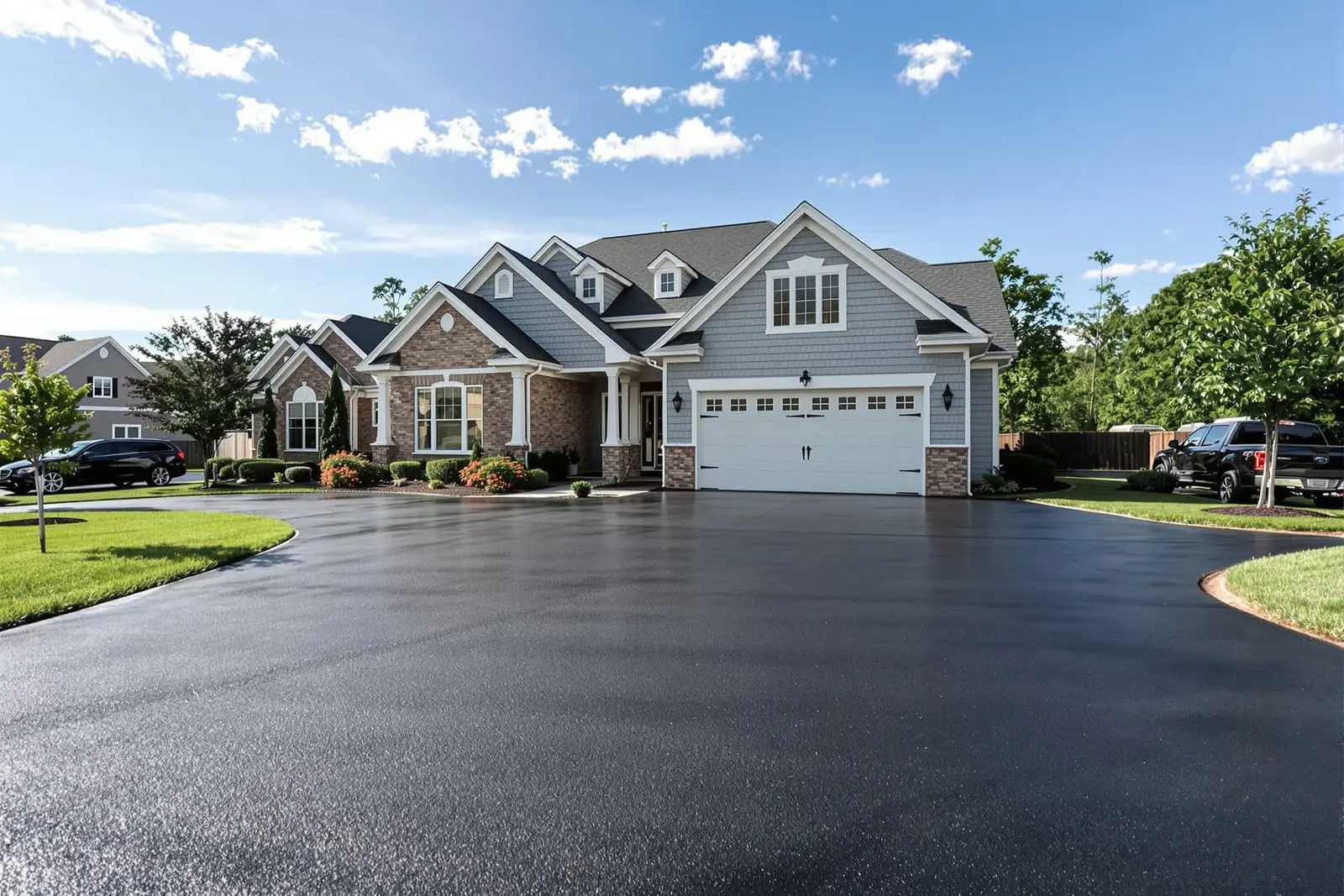
Refresh a tired driveway with asphalt resurfacing in Miami, FL instead of a full tear out. We repair major defects, level low spots, and then apply a new overlay that bonds to your existing base. The result is a smooth, like new surface at a lower cost than total replacement.
Prestige Asphalt Miami provides professional asphalt resurfacing throughout Miami, FL and the surrounding area. Our licensed, insured crew delivers safe, clean, on-time work with a free estimate before anything begins. Call (786) 460-3736 or request your free quote.
Asphalt Resurfacing In Miami: Fix Worn Pavement Without Full Replacement
When asphalt in Miami starts cracking, raveling, or holding water but the base is still solid, asphalt resurfacing is usually the smart move. Instead of tearing everything out, Prestige Asphalt Miami grinds or cleans the existing surface and installs a new asphalt layer (an overlay) on top. You end up with a fresh driving surface, new life for your parking lot or driveway, and a lower price than full reconstruction.
In South Florida, the sun and heat are brutal on asphalt. UV damage dries out the surface, summer storms wash away fines, and standing water near drains or low spots breaks the pavement down fast. A lot of our resurfacing projects in Miami start because the pavement looks gray, has spiderweb cracking, or has patches of loose rock but is not yet breaking up in deep potholes.
Resurfacing is not a band aid. When it is done correctly, with real prep and the right thickness, it usually adds 8 to 15 years of life, depending on traffic and drainage. Prestige Asphalt Miami helps you decide if resurfacing is realistic or if you are better off replacing sections of failed base before putting new asphalt on top.
How Our Asphalt Resurfacing & Overlay Process Works
Every job starts with a walk through. We look for signs that the base is failing, like alligator cracking that moves when you drive over it, large dips that hold water, or soft spots after rain. If we see those, we mark those areas for milling out and base repair before any overlay goes down. Resurfacing on top of a bad base is money wasted.
Step 1 is cleaning and prep. We use blowers and brooms to remove dirt, leaves, and loose stone. Oil soaked spots near parking stalls are pretreated with oil primer so the new asphalt bond is not weakened. In some Miami alleys and older plazas we also remove old vegetation or roots that have pushed through cracks.
Step 2 is milling or leveling. On many commercial lots we use an asphalt milling machine to grind off 1 to 2 inches, especially at transitions to sidewalks, entrances from city streets, and around storm drains. This keeps the final height correct so you do not end up with trip hazards or water trapped against curbs. For residential driveways we often use smaller grinders or saw cuts at the garage, apron, or street edge to keep a smooth tie in.
Step 3 is repair and patching. Any soft or severely cracked areas are cut out, base rock is added or compacted, and new base asphalt is installed and rolled. This is what keeps those prior bad spots from coming right back through your new surface.
Step 4 is tack coating. We spray a tack coat (a thin asphalt emulsion) over the older pavement and repaired areas. This creates a glue layer so the new overlay bonds fully and acts as one solid structure instead of two separate layers that can slip.
Step 5 is installing the new asphalt overlay. For most Miami parking lots and driveways we install a 1.5 to 2 inch compacted surface course. For heavier traffic areas like drive lanes at shopping centers, dumpster pads, or service lanes we may recommend 2 to 3 inches or a stronger mix. The asphalt is laid with a paver when possible for a uniform mat, then compacted with steel drum and rubber tire rollers to lock everything in.
Step 6 is joints, edges, and details. We pay close attention to edges at sidewalks, manholes, gutters, and ADA ramps. These get additional rolling and sometimes handwork so water sheds correctly and there are no abrupt bumps. Finally, the surface is cooled, and we reopen the area in stages so it is safe for you and your customers.
What Drives Cost For Asphalt Resurfacing In Miami
Cost for asphalt resurfacing is not one size fits all. Prestige Asphalt Miami prices overlays based on several specific factors we measure on site.
Existing condition and repairs. The more base failures, deep cracks, or potholes that need patching before resurfacing, the more labor and materials are required. A well aged but mostly solid lot with hairline cracks is on the lower end. A plaza where delivery trucks have broken up sections near docks or dumpsters will need more cutout and base work first.
Thickness of the overlay. A 1.5 inch overlay over light residential traffic uses less asphalt than a 2 to 3 inch overlay built to handle garbage trucks, delivery trucks, and buses. Asphalt is sold by the ton, and heavier sections use more tons per square yard.
Access and phasing. In tight Miami neighborhoods or busy commercial sites, sometimes we must pave at night, work around business hours, or phase the job in sections so you can stay open. That can affect labor and equipment time. Large open areas, like warehouse yards, are usually more efficient than small chopped up surfaces.
Milling needs. If your lot ties into city roads, has many drainage inlets, or already has several older overlays, we may need more milling to get the final height right. Machine milling adds to the cost but prevents future drainage and tripping problems.
Striping and extras. Most resurfacing projects also include new striping, numbering of spaces, fire lane markings, and sometimes concrete work at curbs or wheel stops. We break these out in the estimate so you can see exactly what you are paying for.
We provide written proposals that list square footage, overlay thickness, areas of base repair, and any milling. That way you can compare our scope to other quotes and know you are not just looking at a lump sum with missing prep work.
Local Issues: Heat, Rain, Drainage, And Miami Traffic Patterns
Resurfacing in Miami is not the same as paving in a cooler climate. The combination of heat, humidity, and sudden heavy rain drives how we design each overlay.
Heat and sun. Dark asphalt in South Florida sits in direct sun most of the year. If the mix is wrong or the compaction is poor, the surface can rut or shove where cars turn in slow circles, like at entrances or around fuel pumps. Prestige Asphalt Miami adjusts mix designs and rolling patterns in those high stress areas so the new overlay resists rutting and tire scuffing.
Rain and drainage. We pay close attention to slope during resurfacing. Many calls we get are for lots that hold water after every afternoon storm, especially near speed bumps, drains, and building entrances. During our site visit we check where water currently stands and use a 10 foot straightedge or laser to see how much slope we have. During milling and paving we correct minor birdbaths and adjust thickness to restore a steady path for water to reach the gutter or inlet.
Coastal and canal properties. Near the bay or canals, groundwater and soil conditions can soften the base under asphalt. In those cases we often recommend localized base reinforcement before overlay, and sometimes a slightly thicker surface so the new pavement is not as sensitive to small movements below.
Traffic patterns. In Miami, a grocery store lot does not behave like a small office lot. Grocery and shopping center overlays see constant turning, stopping, and cart traffic. We may tighten joint spacing, add extra compaction passes at drive lanes, and use a more durable surface mix near main entrances. For residential driveways on narrower streets, we focus on smooth tie ins to city pavement and avoiding trip hazards at sidewalks.
Local regulations and logistics. We are familiar with permitting requirements for larger resurfacing jobs in Miami and work around peak traffic times to reduce disruption. For busy streets or shared entrances, we can coordinate phasing so customers always have a way in and emergency routes stay open.
What To Know Before You Resurface & How Prestige Asphalt Miami Helps
Before you commit to asphalt resurfacing, it helps to know if your pavement is a good candidate. Resurfacing works best when the surface is tired but the structure is mostly sound. If you see deep, flexible alligator cracking in large areas, repeated sinkholes, or major tree root damage, you may need more extensive base work in those spots.
We often recommend resurfacing when there are many cracks but they are mostly tight, the pavement still feels firm under load, and problems are limited to the top couple of inches. In that situation a properly bonded overlay with some pre patching stops water from getting in and resets the clock on your asphalt.
Timing the work is another important decision. In Miami we can pave year round, but we try to schedule overlays in dry windows when possible so your new surface is not exposed to heavy rain before it has cooled and firmed up. For commercial properties we usually plan work in sections so parts of your lot stay open.
After resurfacing, you will need to keep vehicles off the new asphalt for at least 24 hours in most weather, sometimes a bit longer for heavy trucks. We include traffic control in larger projects with cones and tape, and we can help you plan signage for customers. New striping is usually applied within a day or two of paving, once the surface is cool and ready.
Maintenance after an overlay is simple but important. Keeping drains clear, cleaning up oil spills, and crack sealing as soon as small cracks appear will extend the life of your resurfaced lot or driveway. Sealing may be recommended a year or so after installation depending on traffic and exposure, and we can talk through that during the estimate.
Prestige Asphalt Miami is locally based, so when we evaluate your pavement for resurfacing we are looking long term, not just at getting a quick job. We explain where resurfacing makes sense, where you should invest in base repair, and how to phase the work around your business or household so you get the best result for your budget.
“
Professional asphalt resurfacing & overlays, done right the first time, quality materials, honest pricing, and results that last.
Prestige Asphalt Miami
Asphalt Resurfacing & Overlays Across Our Service Area