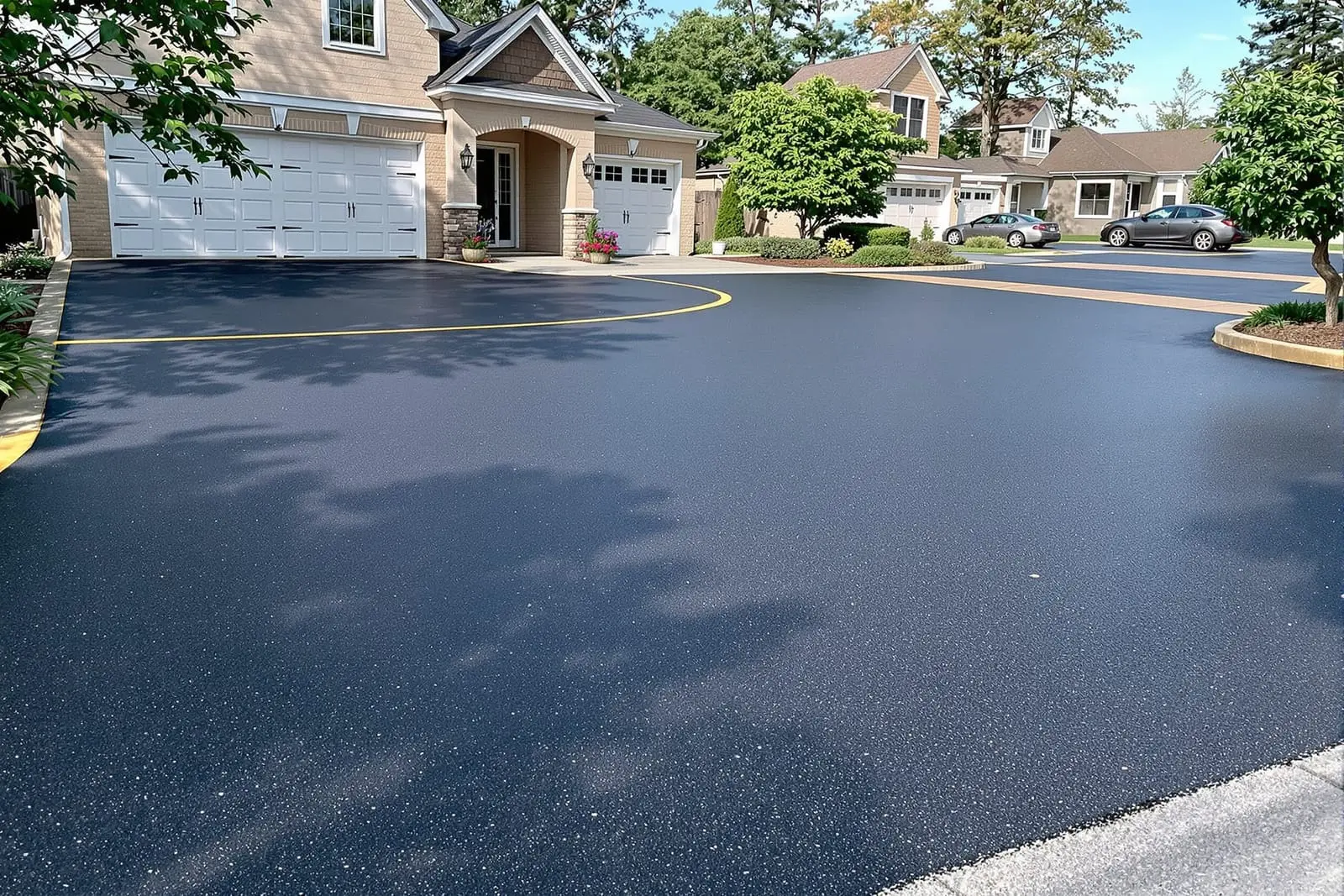
Extend the life of your pavement with commercial asphalt resurfacing in Miami, FL. We repair failed areas, level depressions, and then apply a new asphalt overlay that strengthens and renews your surface. This approach is ideal for aging parking lots and drive lanes that still have a solid base.
Prestige Asphalt Miami provides professional commercial asphalt resurfacing throughout Miami, FL and the surrounding area. Our licensed, insured crew delivers safe, clean, on-time work with a free estimate before anything begins. Call (786) 460-3736 or request your free quote.
Commercial Asphalt Resurfacing for Miami Businesses
If your parking lot or drive lanes are faded, rough, or spider-cracked but not completely falling apart, commercial asphalt resurfacing is usually the smartest way to bring it back without paying for a full tear out. Prestige Asphalt Miami helps local properties like shopping centers, condo complexes, warehouses, schools, and medical offices keep their asphalt safe and good looking in our hot, coastal climate.
Resurfacing, also called an asphalt overlay, places a new layer of hot mix asphalt over your existing pavement after it is properly repaired and prepped. Done right, it can add 8 to 15 years of life to your pavement and dramatically improve curb appeal for customers and tenants. In Miami, this often means correcting sun-baked, oxidized surfaces, ruts from heavy delivery traffic, and damage from daily afternoon thunderstorms.
Our crew understands the layout challenges that are common in Miami. Tight urban lots in areas like Brickell require careful traffic control and phasing. Large suburban plazas in Kendall and Doral need work done in sections so businesses stay open. We plan every resurfacing project around your hours, peak traffic times, and access needs so you can keep operating while we upgrade your pavement.
How Commercial Asphalt Resurfacing & Overlays Actually Work
Commercial asphalt resurfacing is not just putting a thin coat on top and hoping for the best. Prestige Asphalt Miami follows a step by step process that is tailored to Miami commercial properties:
1. Inspection and evaluation: We walk the entire lot, check drainage patterns after rain when possible, probe soft spots, and measure grade toward drains or swales. In older Miami strip centers, we often find low areas near the storefronts where years of overlaying without milling have raised the pavement above the original slab or entry thresholds.
2. Structural repairs first: Any deep alligator cracking, potholes, or base failures are cut out with a saw, excavated, and rebuilt with new base rock and asphalt. If this step is skipped, the new overlay will mirror those failures within a year or two.
3. Milling or grinding: In many commercial lots we mill 1 to 2 inches of existing asphalt, especially near catch basins, ADA ramps, and tie ins to city streets. This prevents creating tripping hazards or steep transitions and keeps water flowing to drains instead of back toward buildings.
4. Tack coat application: A bonding layer called tack coat is sprayed on the existing pavement. This is what makes the new asphalt actually fuse to the old surface. In our humidity we use products and application rates that have proven to bond well without staying slick for too long.
5. New asphalt overlay: Hot mix asphalt is laid with a commercial paver, then compacted with steel and rubber tired rollers. Typical overlay thickness for Miami commercial work is 1.5 to 2 inches, adjusted for traffic loads and existing grades.
6. Joint transitions and detailing: Edges are hand worked where the paver cannot reach, such as around manholes, dumpster pads, and tight corners by loading docks.
7. Striping and re‑signing: Once the new surface cools, we restripe stalls, fire lanes, ADA spaces, and any specialty markings like directional arrows or delivery zones. If we adjusted your layout to improve traffic flow or meet updated code, that is integrated into the striping plan.
What Affects Cost for Commercial Asphalt Resurfacing in Miami
Two lots of the same size can have very different resurfacing costs. When Prestige Asphalt Miami prepares a proposal, we walk you through the real cost drivers so there are no surprises.
The first major factor is the condition of the existing base and asphalt. If your lot only has surface cracking and faded color, the project may mainly be cleaning, minor patching, a tack coat, and a new overlay. If we find base failures, saturated areas from irrigation leaks, or sinkholes near utility trenches, more saw cutting, excavation, and base rebuilding will be needed.
Thickness of the overlay also affects price. A light duty office lot with only passenger vehicles can usually use a thinner lift of asphalt than a shopping center that gets box trucks and frequent deliveries. In industrial areas of Miami, especially near the airport or the river, we usually recommend heavier sections or reinforced areas at loading docks.
Access and traffic control matter too. Working on a 24 hour facility like a hospital or logistics center often means night work, multiple phases, and additional flaggers so emergency routes stay open. This adds labor and equipment time, but it keeps operations running. Tight access behind mid rise condos around Miami Beach can require smaller equipment and more handwork, which slightly increases cost.
Finally, drainage corrections and code upgrades can change scope. Raising low spots, reshaping slopes to prevent ponding, or bringing ADA parking and accessible routes into compliance may require extra milling and fine grading. We always explain where these upgrades are optional improvements versus where they are necessary for safety or compliance.
Common Problems We Solve With Overlays in Miami’s Climate
Miami’s heat, UV exposure, and daily thunderstorms create specific pavement issues that commercial property owners see again and again. Commercial asphalt resurfacing is often the most efficient way to correct them without a full reconstruction.
One of the biggest issues is oxidation and raveling. The sun dries out asphalt binders, turning the surface gray and brittle. Stones begin to loosen and tire noise increases. An overlay replaces the worn surface with fresh, flexible asphalt that resists further raveling and gives a smooth, dark finish.
Another common problem is standing water. You may see puddles that sit for hours after a storm, especially around catch basins or low spots formed by years of patching. If we simply overlay over these areas, the water problem often gets worse. Prestige Asphalt Miami corrects this by selectively milling, adjusting slopes around drains, and sometimes resetting or raising inlets so water runs off correctly.
We also see rutting and depressions where delivery trucks or garbage trucks follow the same path every day. On routes to loading docks, resurfacing usually includes strengthening those wheel paths with deeper repairs under the overlay, or using a slightly stronger mix design so the ruts do not come back.
In older commercial properties, you may already have one or two past overlays. Too many layers can create high edges at sidewalks, doorways, and utility covers, which becomes a tripping hazard and an ADA concern. In these cases, we rely more on milling to remove excess build up before installing the new surface, restoring a smooth transition to curbs and concrete.
Planning Your Project With Prestige Asphalt Miami
Good planning is what makes commercial asphalt resurfacing successful for busy Miami properties. Before we schedule work, we map out the phases of the project with you. For a shopping center, this might mean resurfacing in halves or thirds, with clear pedestrian routes and delivery paths kept open at all times. For a gated community, we may schedule entry lanes on slow weekdays and finish guest parking on weekends.
We coordinate around waste pickup, delivery schedules, and any large events planned at your property. The goal is to shorten the time any one area is blocked off and keep customers, residents, and staff informed. We supply temporary signage, cones, and in many cases a basic notification letter or map you can share with tenants.
Before we start, we also talk through mix options and appearance. Some clients want a standard overlay that will get sealcoated a year later. Others prefer to combine an overlay with a specific striping layout that improves traffic flow, adds more defined loading zones, or increases ADA spaces. For Miami retail centers, fresh layout and striping after resurfacing often improves the perceived safety and organization of the entire property.
At the end of the project, we walk the site with you, review all repaired areas, and go over maintenance tips. In our climate, this typically includes a recommended schedule for sealcoating, how to handle oil spills quickly, and what early warning signs of failure to watch for so we can address small issues before they become major repairs.
“
Professional commercial asphalt resurfacing & overlays, done right the first time, quality materials, honest pricing, and results that last.
Prestige Asphalt Miami
Commercial Asphalt Resurfacing & Overlays Across Our Service Area